
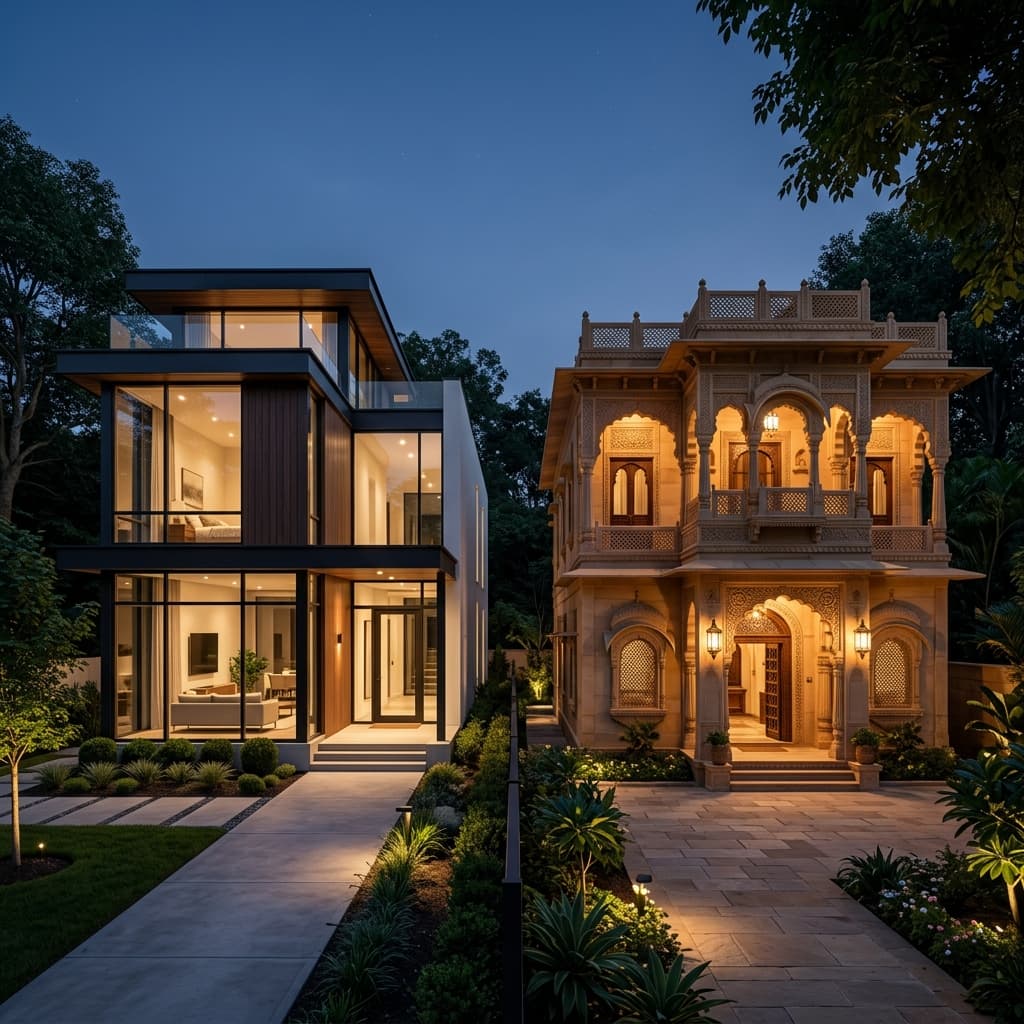
Two Philosophies of Home Design
Every home tells a story through its architecture. In India, homeowners today face a fascinating choice: embrace the sleek lines of modern minimalism or honor the rich heritage of traditional Indian architecture. Understanding both philosophies helps you make an informed choice — or better yet, find a beautiful fusion of the two.
Modern Architecture: Less is More
Modern architecture is defined by clean geometric lines, flat or low-slope roofs, large glass windows, open floor plans, and minimal ornamentation. Materials like concrete, steel, glass, and engineered wood dominate the palette. The philosophy is that beauty lies in simplicity, proportion, and the interplay of light and space.
In the Indian context, modern homes typically feature box-like facades with cantilevered elements, floor-to-ceiling windows, double-height living spaces, and seamless indoor-outdoor transitions through sliding glass doors.
Traditional Indian Architecture: Rooted in Culture
Traditional Indian architecture draws from centuries of regional wisdom — from the haveli courtyards of Rajasthan to the sloping roofs of Kerala, from the carved wooden balconies of Gujarat to the stone mandapams of Tamil Nadu. Key features include central courtyards (for ventilation and light), ornate columns and arches, jaali screens (for privacy and airflow), and pitched or multi-tiered roofs.
These elements aren't just decorative — they're engineering solutions perfected over millennia. Courtyards create natural stack ventilation. Thick stone walls provide thermal mass. Jaali screens filter harsh sunlight while allowing breezes.
The Fusion Approach
The most exciting trend in Indian residential architecture is contemporary fusion — modern spatial planning with traditional design accents. Think an open-plan living room with a traditional jaali feature wall, a flat-roofed villa with a central courtyard, or a minimalist facade with hand-carved stone entrance detailing.
Making Your Choice
Choose Modern if: You prefer clean aesthetics, want maximum natural light, have a smaller plot (modern design maximizes space), and are building in an urban setting.
Choose Traditional if: You value cultural identity, have a larger plot (traditional elements need space), want passive cooling advantages, and are building in a heritage-conscious neighborhood.
Conclusion
Your home's style should reflect your personality, climate, and cultural roots. There's no wrong answer — only your answer. Use Naksha AI to experiment with different design approaches before breaking ground.