
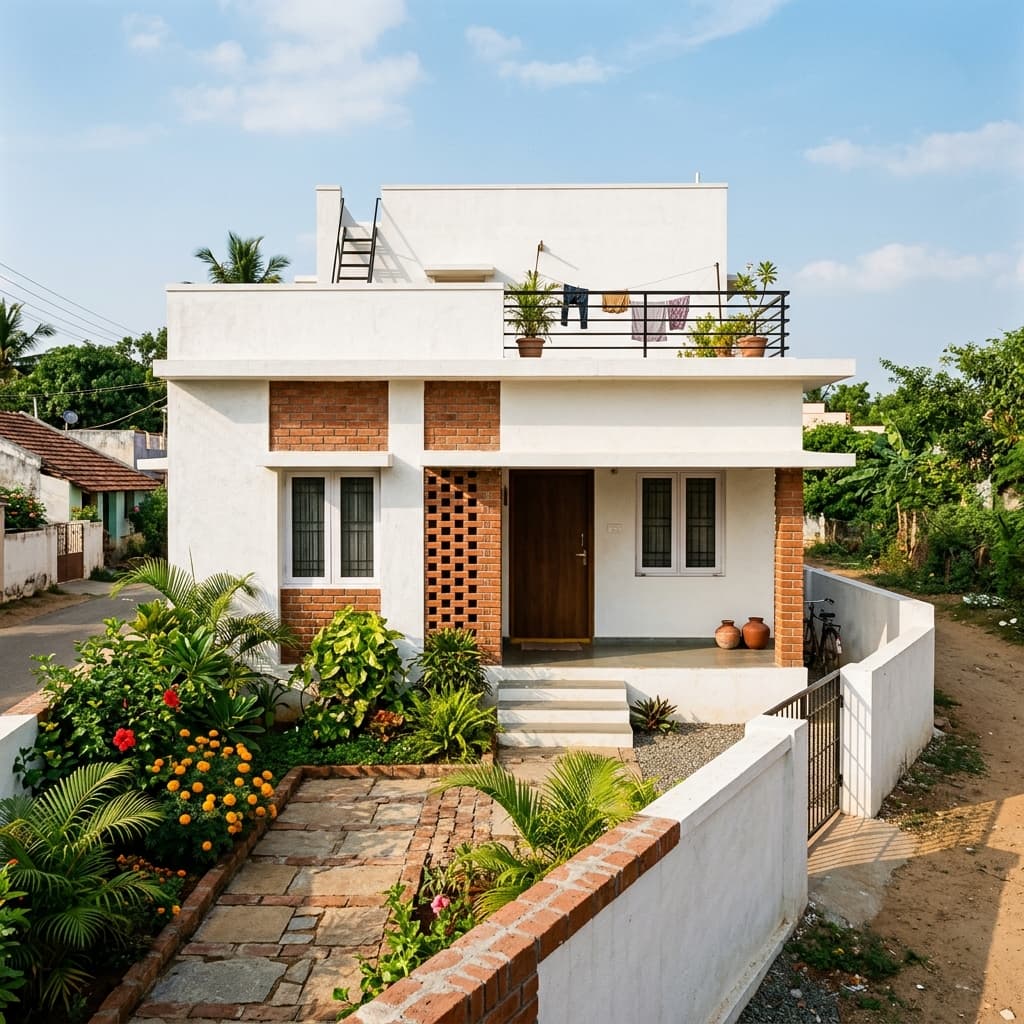
Beautiful Homes Don't Require Unlimited Budgets
One of the biggest myths in Indian home construction is that beautiful homes are expensive homes. The truth? Smart design costs nothing. A well-planned floor plan, thoughtful material selection, and strategic splurging on key elements can create a stunning home within ₹30 lakhs (excluding land cost). Here's how.
1. Optimize Your Floor Plan First
The cheapest way to save money is to eliminate waste in your floor plan. Every square foot you build costs ₹1,500-2,500 (depending on your city and specifications). A 100 sq ft corridor that serves no purpose costs ₹1.5-2.5 lakhs. Minimize corridors, eliminate unnecessary rooms, and make every space serve a function. A well-planned 1200 sq ft home will feel better than a poorly planned 1600 sq ft one.
2. The 80/20 Material Rule
Use basic materials for 80% of the home and splurge on the remaining 20% that creates the most visual impact. Example: Standard vitrified tiles for bedrooms (₹40/sq ft) but premium Italian marble for just the living room (₹150/sq ft). PPC plaster for most walls but a single textured stone accent wall in the drawing room. This creates the illusion of a premium home at a fraction of the cost.
3. Smart Structural Choices
Use load-bearing construction instead of framed construction for G+1 homes — it's 15-20% cheaper. Choose AAC blocks over traditional bricks — they're faster to lay (reducing labor costs), provide better insulation, and reduce plaster thickness needed. Use pre-engineered staircases instead of cast-in-situ to save on formwork costs.
4. Where to Splurge vs Where to Save
Splurge on: The main entrance door (it's the first impression), kitchen countertop (you use it daily), bathroom fittings (they affect experience), and one feature wall in the living room.
Save on: Bedroom flooring (tiles work fine), internal doors (flush doors are sleek and cheap), ceiling design (simple POP cornicing beats elaborate false ceilings), and external paint (good quality paint in simple white or off-white looks premium).
5. Design for Low Maintenance
A budget home should be designed for minimal ongoing costs. Use weather-resistant exterior materials (textured paint, stone cladding). Install LED lighting throughout. Design for natural ventilation to reduce AC dependency. Use drought-resistant landscaping. These choices save lakhs over the home's lifetime.
Conclusion
Building a beautiful home on a budget is about priorities, not compromises. Start with a smart floor plan from Naksha AI — it's the single most impactful decision for your budget because it determines how much you build, how efficiently you build, and how livable the result will be.